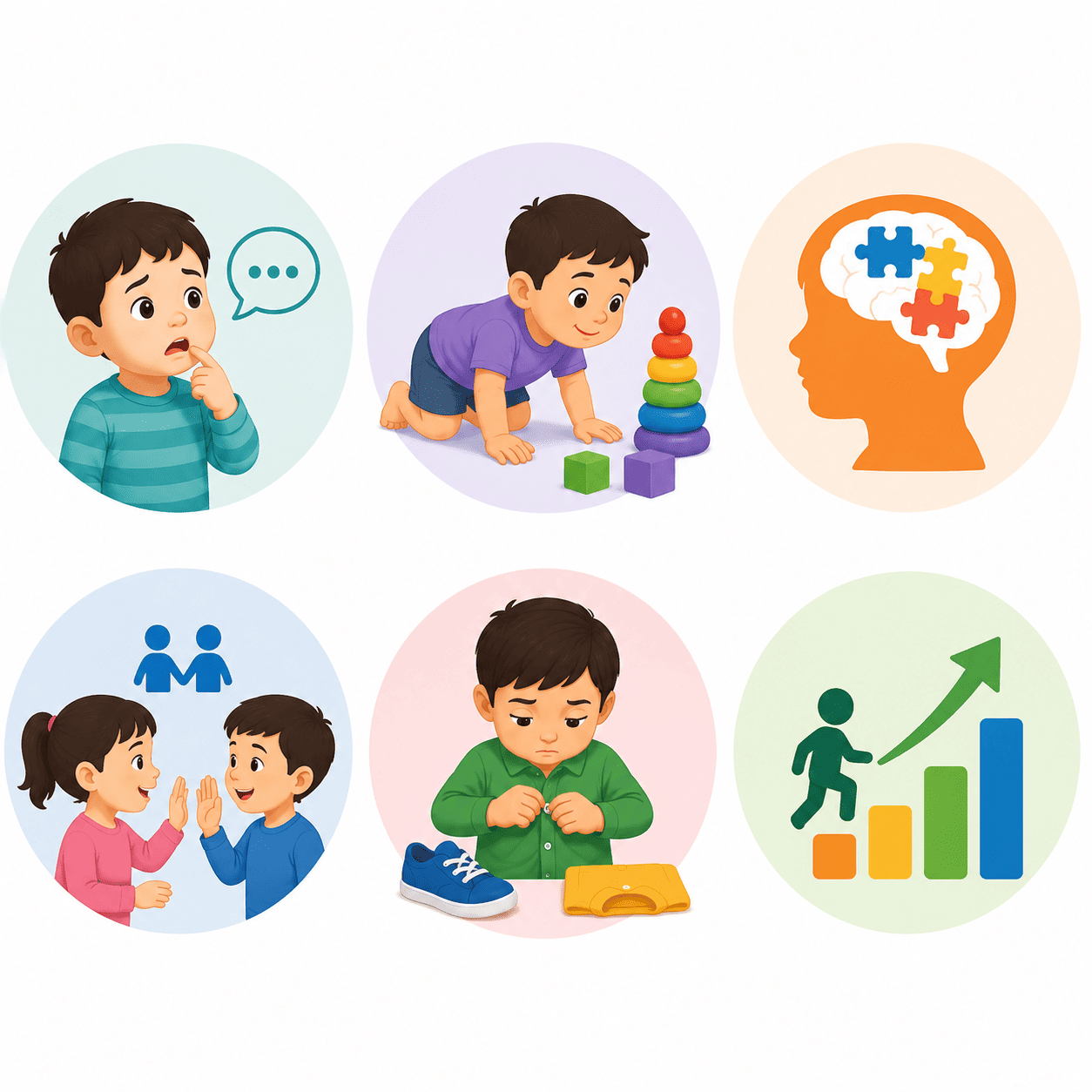
Global Developmental Delay (GDD) is a condition in which children experience significant delays in multiple areas of development, including speech, motor skills, learning, social interaction, and daily living abilities. Early diagnosis and personalized therapy help children build essential skills, improve independence, and reach their full developmental potential.
Global Developmental Delay (GDD) affects multiple areas of a child's development, including speech, movement, learning, social interaction, and daily living skills. Early intervention and personalized therapy can help children achieve their developmental milestones.
Delays in speech, language, and communication skills.
Difficulty with balance, coordination, and physical movements.
Slower development of thinking, memory, and problem-solving abilities.
Early intervention improves development and independence.
Global Developmental Delay (GDD) is a developmental condition where a child experiences delays in achieving important milestones such as speech, movement, learning, social interaction, and daily living skills. Early assessment and therapeutic intervention can significantly improve a child's overall development and quality of life.
Children with Global Developmental Delay (GDD) may experience delays in multiple areas of development, including speech, movement, learning, social interaction, and daily living skills. Early identification and intervention can greatly improve a child's overall development.
Difficulty speaking, understanding language, or communicating with others.
Late crawling, walking, running, or difficulty with balance and coordination.
Slower learning, problem-solving difficulties, and delayed understanding of concepts.
Difficulty making friends, interacting with others, or responding to social situations.
Needs extra support with eating, dressing, personal hygiene, and self-care activities.
Reaches important physical, language, and social milestones later than expected.
Global Developmental Delay (GDD) is a developmental condition influenced by a combination of genetic, neurological, medical, and environmental factors. There is no single cause, and every child's developmental journey and support needs are unique.
Certain genetic disorders or inherited conditions may affect a child's overall development and increase the likelihood of Global Developmental Delay.
Differences in brain growth or neurological development can affect learning, communication, movement, and overall developmental progress.
Premature birth, low birth weight, pregnancy complications, or lack of oxygen during birth may contribute to developmental delays.
Infections, nutritional deficiencies, metabolic disorders, or environmental influences may also contribute to delayed child development.
At Therapy Windows, our experienced specialists use a comprehensive assessment process to evaluate developmental milestones, communication, motor skills, cognitive abilities, and social development to create the most effective therapy plan.
Book an appointment with our developmental specialists for an initial consultation.
We assess communication, motor skills, learning abilities, cognitive development, and daily functioning.
Receive a comprehensive report explaining the child's strengths, developmental needs, and recommended therapeutic interventions.
A customized therapy program is designed to improve communication, motor skills, learning abilities, and overall development.
Find answers to the most common questions about Global Developmental Delay (GDD), its symptoms, diagnosis, treatment, and therapy options.