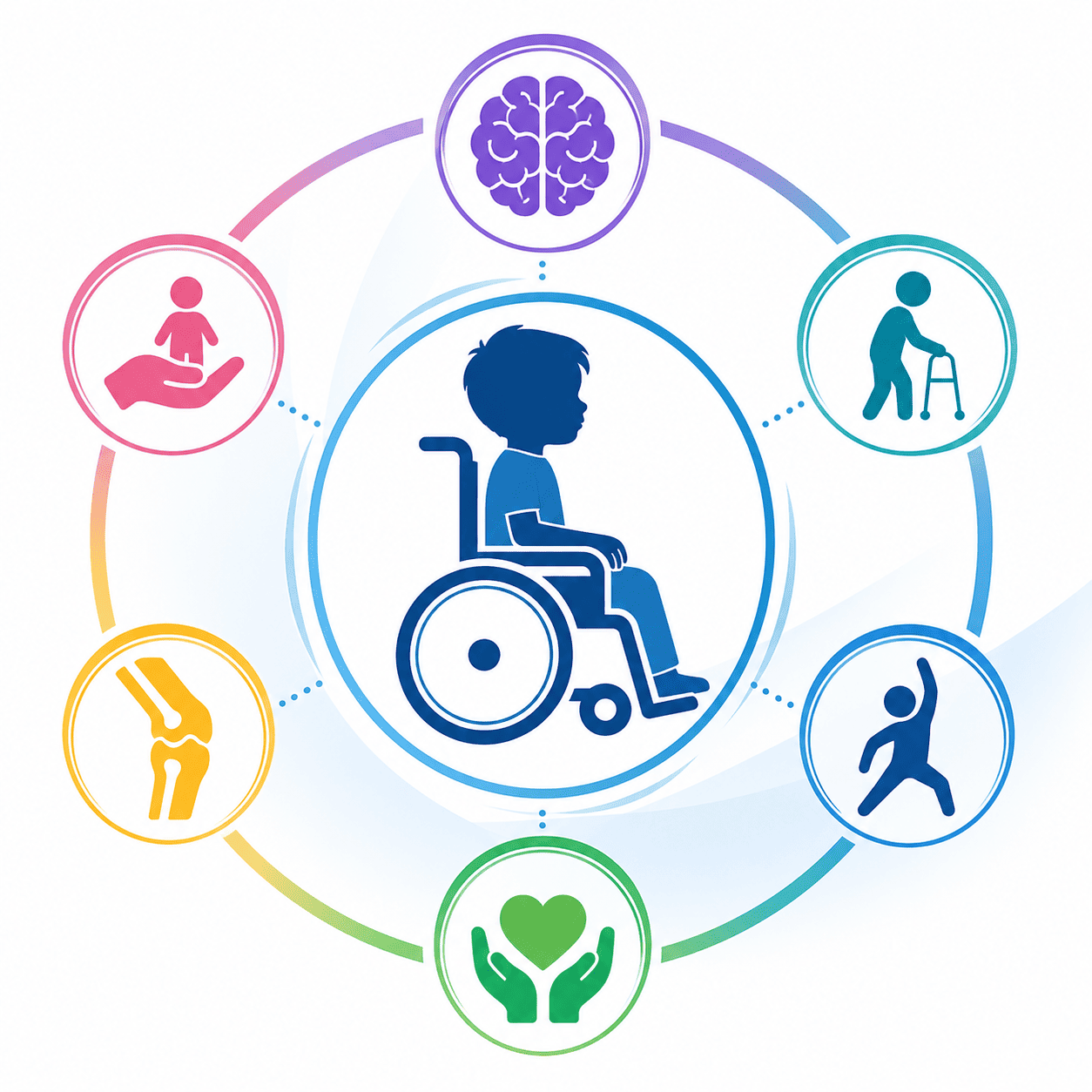
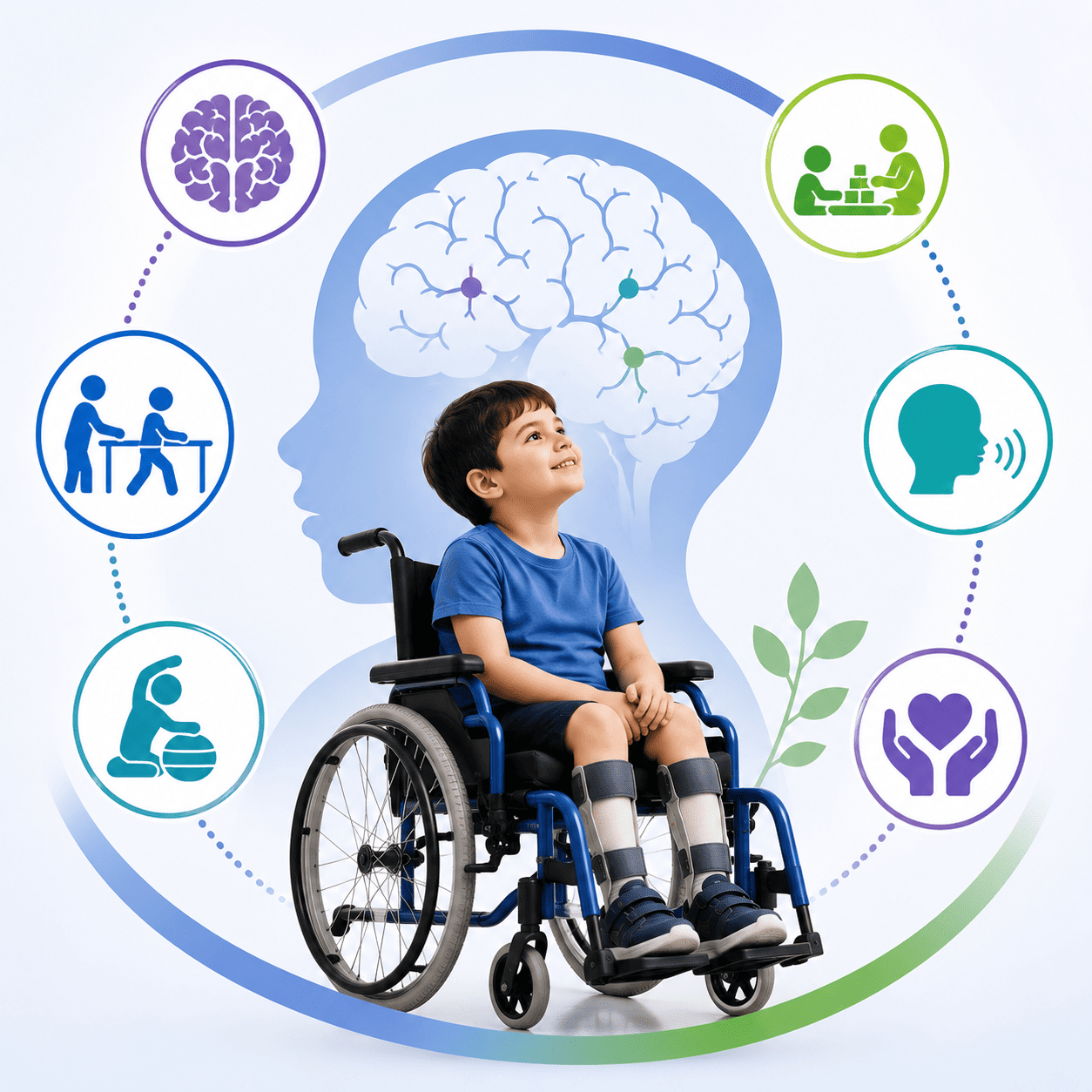
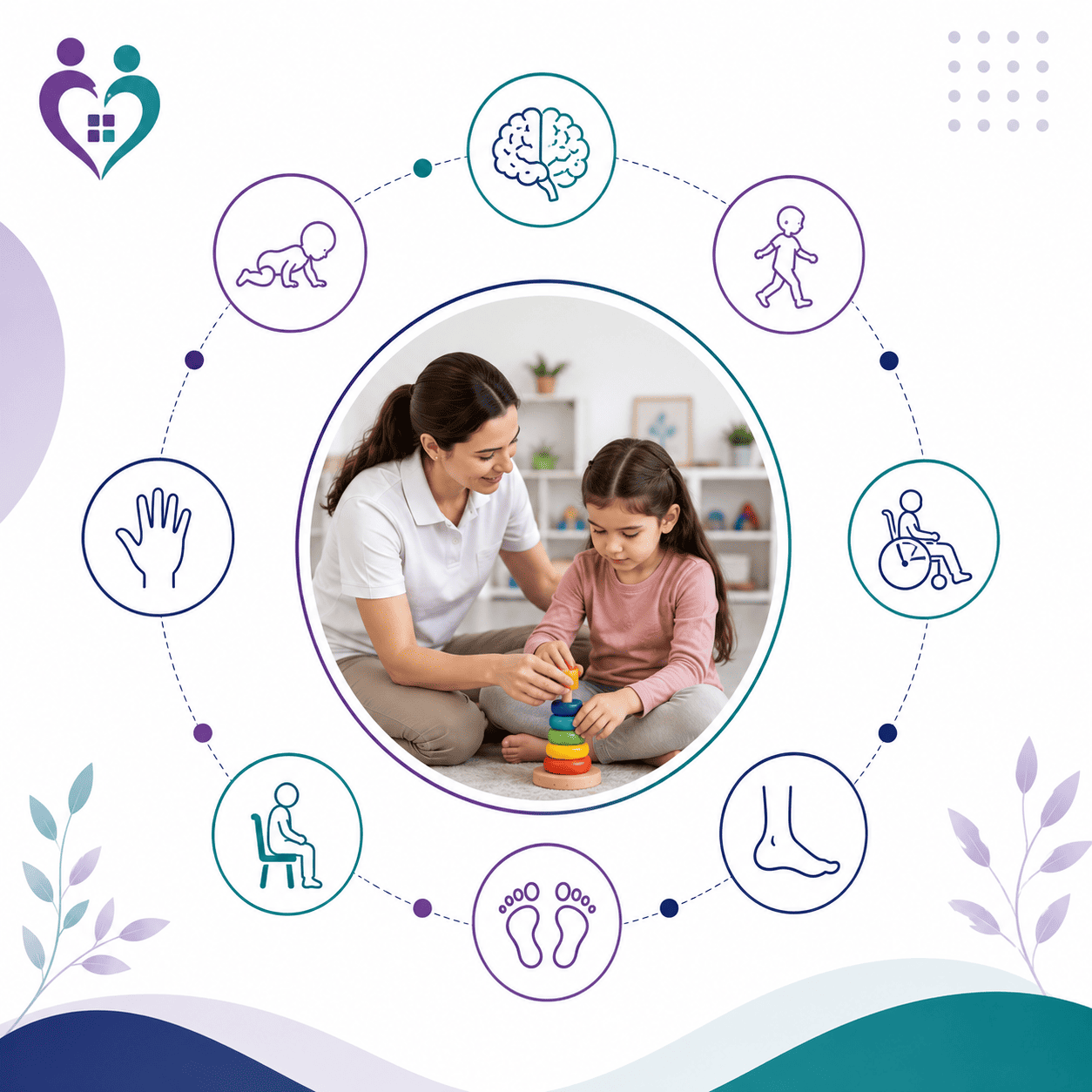
Cerebral Palsy (CP) is a neurological condition that affects movement, muscle coordination, posture, and balance due to damage to the developing brain before, during, or shortly after birth. Every child experiences Cerebral Palsy differently. With early diagnosis, physiotherapy, occupational therapy, speech therapy, and personalized rehabilitation programs, children can improve mobility, communication, independence, and overall quality of life.
Cerebral Palsy (CP) is a neurological condition that affects movement, muscle coordination, posture, and balance due to damage to the developing brain. While it is a lifelong condition, early intervention, rehabilitation, and specialized therapies help children improve mobility, communication, independence, and overall quality of life.
Cerebral Palsy affects muscle control, coordination, balance, and body movements, making everyday activities more challenging.
Children may experience stiff muscles, muscle weakness, or involuntary movements that affect posture and mobility.
Some children may have speech, swallowing, or communication difficulties and benefit from speech and language therapy.
Physiotherapy, occupational therapy, speech therapy, and family support help improve mobility, independence, and participation in daily activities.
Cerebral Palsy (CP) is a neurological condition caused by damage to the developing brain before, during, or shortly after birth. It primarily affects movement, muscle tone, posture, balance, and coordination. Some children may also experience challenges with speech, learning, vision, or daily activities. Although Cerebral Palsy is a lifelong condition, early diagnosis, physiotherapy, occupational therapy, speech therapy, and personalized rehabilitation programs can significantly improve mobility, independence, and overall quality of life.
Cerebral Palsy affects movement, muscle tone, posture, and coordination. Symptoms vary from child to child and may range from mild to severe. Early diagnosis and therapy can help improve mobility, communication, and independence.
Children may have difficulty walking, balancing, sitting, or coordinating body movements.
Muscles may be unusually stiff (spasticity), floppy, or difficult to control during movement.
Some children may experience delayed speech, unclear speech, or difficulty communicating effectively.
Difficulty chewing, swallowing, or controlling facial muscles may affect eating and drinking.
Children may require assistance with dressing, bathing, writing, and other everyday activities.
Physiotherapy, occupational therapy, speech therapy, and rehabilitation programs help improve functional abilities and independence.
Cerebral Palsy is caused by damage to the developing brain, usually before birth, during delivery, or shortly after birth. The condition affects muscle control, movement, posture, and coordination. Early diagnosis and rehabilitation therapies can help children achieve better mobility and independence.
Abnormal brain development during pregnancy, genetic factors, or maternal infections may affect the baby's developing brain.
Premature birth, low birth weight, oxygen deprivation, or complications during delivery may increase the risk of Cerebral Palsy.
Head injuries, meningitis, encephalitis, or other neurological conditions during infancy can damage the developing brain and affect movement and coordination.
Although Cerebral Palsy cannot be cured, physiotherapy, occupational therapy, speech therapy, and continuous family support help children improve mobility, communication, and daily living skills.
At Therapy Windows, our experienced specialists perform a comprehensive neurological and developmental assessment to evaluate your child's movement, muscle tone, posture, coordination, communication, and functional abilities before creating a personalized rehabilitation and therapy plan.
Schedule an appointment with our pediatric neurologists and rehabilitation specialists.
We evaluate muscle tone, posture, balance, movement, motor skills, coordination, and developmental milestones.
Our specialists review medical history, physical findings, and diagnostic reports to determine the type and severity of Cerebral Palsy.
A customized rehabilitation program including physiotherapy, occupational therapy, speech therapy, and mobility training is designed to improve independence and quality of life.
Find answers to the most common questions about Cerebral Palsy, its causes, diagnosis, treatment options, and rehabilitation therapies.